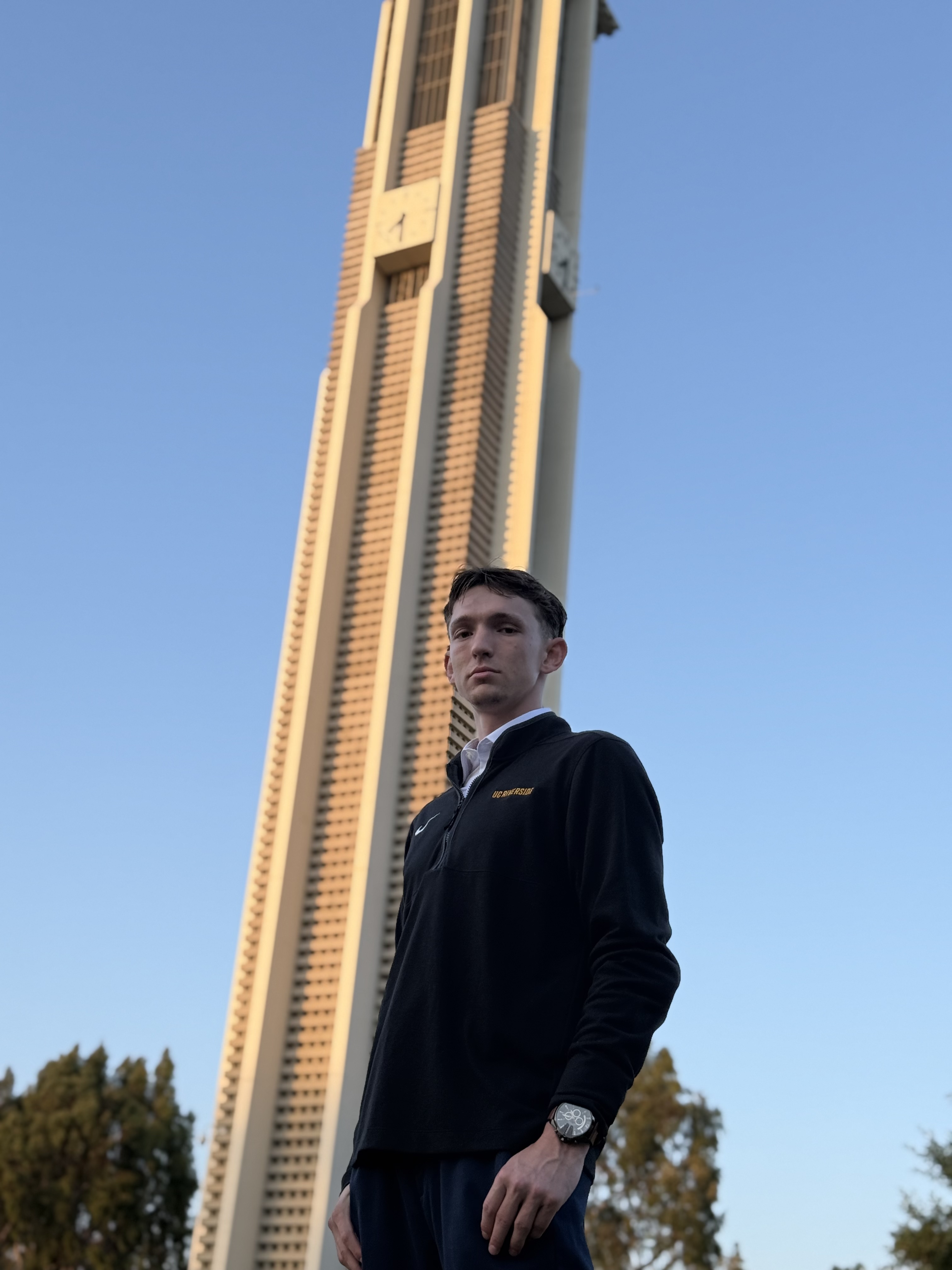
Overview
I am a hardworking, reliable, and motivated student. I graduated from Riverside City College in June 2024, where I achieved a GPA of 3.94 in Physics (A.S.) and 3.93 for both Computer Science (A.S.) and Mathematics (A.S.).
I went on to graduate from UC Riverside with a B.S. in Computer Science and a 3.81 GPA, earning Cum Laude honors. Along the way I served as Vice President of the Competitive Coding Club and assisted with research projects in the Cybersecurity lab.
Quick facts
- B.S. Computer Science @ UCR — Cum Laude (2026)
- Incoming M.S. in Computational Data Science @ UCR
- Interests: systems security, data-driven ML
- Tools: C/C++, Python, Linux
Projects
Featured
CVE-2020-0041 Exploit Reproduction
Reproduced and adapted a real-world Android kernel exploit (CVE-2020-0041) — an out-of-bounds write in the binder IPC driver — on a QEMU-emulated ARM64 system, achieving full privilege escalation from an unprivileged process to a root shell.
- Tech: C, ARM64 Assembly, QEMU, Linux Kernel, Android Binder
- Highlight: Adapted a Pixel 3–targeted exploit to a QEMU/Debian environment by writing a custom binder service manager, re-extracting kernel symbol offsets, and fixing arm64 stack alignment — chaining a UAF, KASLR bypass, and arbitrary kernel read/write into full privilege escalation
- What I learned: The gap between a vulnerability write-up and a working PoC is enormous — exploitation is an iterative process of building increasingly powerful primitives, and environment differences demand deep understanding of how the exploit interacts with the target system
Security
Kernel Exploitation
Systems
A from-scratch CUDA implementation of the FlashAttention forward pass that computes exact attention without ever materializing the N×N score matrix, benchmarked against naive PyTorch and tiled-GEMM baselines.
- Tech: CUDA, C++, PyTorch (libtorch)
- Highlight: Implemented the FlashAttention-2 forward pass as a single fused kernel using Q/K/V tiling and an online (streaming) softmax — parallelizing over query-tiles for a race-free design with no global synchronization
- What I learned: Translating GPU-agnostic pseudocode into CUDA, mapping algorithmic tiles onto thread blocks, and reasoning about HBM traffic, shared memory, and space complexity
CUDA
GPU Computing
Systems
Class Projects
A robotics simulation project implementing autonomous path planning and mapping in ROS, developed in a two-person team.
- Tech: Python, ROS, RViz
- Highlight: Implemented Dijkstra-based path planning with custom Planner and Publisher nodes, interactive waypoint selection in RViz, and SLAM-generated occupancy grids
- Analysis: Evaluated empirical runtime and space complexity of multiple path planning algorithms across varying path lengths using visualization
- What I learned: Integrating perception, graph search, and performance analysis to reason about real-time robotic navigation systems
Robotics
Systems
Algorithms
An exploratory data analysis project examining relationships between stress levels and lifestyle factors using survey data from Computer Science students at UCR.
- Tech: Python, Pandas, Matplotlib
- Highlight: Identified statistically significant relationships between reported stress levels and lifestyle variables using hypothesis testing at standard significance thresholds and visualizations
- What I learned: Applying EDA, statistical testing, and visualization to reason about real-world survey data
Data Science
Statistics
Analysis